


Document Translation vs. Interpreting: Same Discipline, Different Methods

Document Translation vs. Interpreting: Same Discipline, Different Methods
At first glance, document translation and interpreting may seem like the same thing—after all, both involve transferring meaning from one language into another. In reality, they belong to the same discipline of cross-language communication, but the techniques and skill sets required are remarkably different.
Document Translation
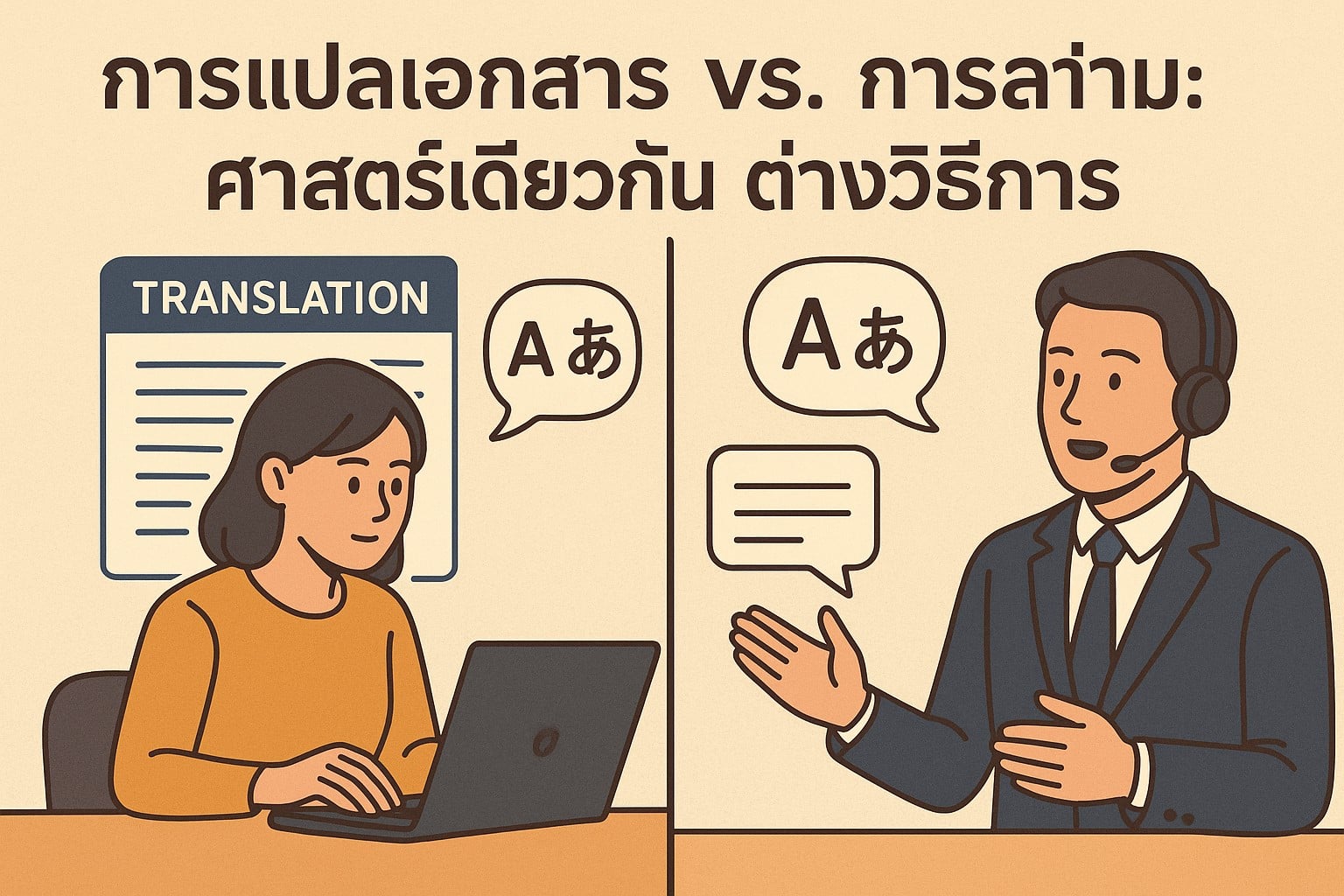
Translation is all about working with written texts—whether printed documents or digital files. A translator has the advantage of time: they can research terminology, check accuracy, and refine wording to fit the context. The text can be revised and polished until it is clear and precise. This makes translation suitable for work that demands detail and accuracy, such as legal contracts, government documents, user manuals, or academic articles.
Interpreting
Interpreting, by contrast, is a live performance. The interpreter must listen, grasp the key message, and convey it instantly into another language—either simultaneously or consecutively. Unlike translation, there’s no time to look up terms or revise sentences. It requires sharp listening skills, memory, quick thinking, and strong emotional control. Interpreting is essential for real-time communication such as international conferences, business negotiations, or live seminars.
Same Discipline, Different Methods
Despite their differences, both translation and interpreting share the same ultimate goal: to deliver meaning accurately, clearly, and appropriately. Both roles go beyond language skills; they also demand cultural understanding, awareness of tone, and sensitivity to the speaker’s intent.
Conclusion
Translation emphasizes precision and detail, while interpreting emphasizes speed and accuracy in real time. They are two sides of the same coin—complementary skills that play vital roles in connecting people across languages and cultures in today’s globalized world.

